
Slots Temple RTP and the Best Slots Odds Guarantee Explained
 Available in GB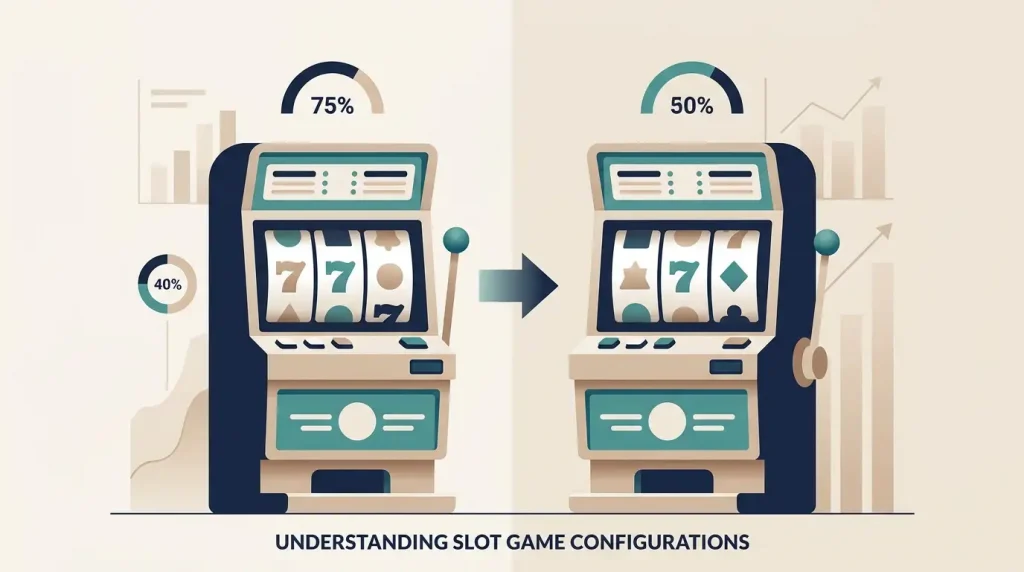
Slots Temple’s Best Slots Odds Guarantee is a policy about game configuration: the operator says it selects the highest available RTP version of each real-money slot where a supplier makes more than one version available. That matters because two casinos can offer a slot with the same title while using different RTP settings. A higher RTP means a smaller theoretical house edge over a very large amount of play, but it does not predict what will happen in your next spin or session.
The useful way to read the guarantee is therefore as a comparison tool, not a promise of profit. It can help you check whether you are being offered the more favourable mathematical version of the same game. It cannot make a random slot safe, remove variance, or guarantee that a higher-RTP game will return more money to you over a short period.
Table of Contents
- What Slots Temple actually guarantees
- RTP in plain English
- Why the same slot can have different RTP versions
- A simple RTP-check process
- RTP and volatility are different ideas
- Why a small RTP difference can still matter mathematically
- What RTP does not tell you
- How to use the guarantee as a decision tool
- Common RTP mistakes to avoid
- Bottom line
- FAQ
What Slots Temple actually guarantees
Slots Temple’s official support page says that the same slot can exist in multiple versions with different return-to-player percentages. Its policy is to offer the best available RTP version of the real-money game. The site’s current homepage uses similar language, saying it chooses the highest RTP version available.
For the wider brand context, start with our full Slots Temple review. This is narrower than saying that every game on the site has the highest RTP in the entire market. Suppliers decide which configurations exist, and the relevant comparison is between available versions of the same slot. The guarantee is about Slots Temple’s selection policy when those alternative versions are offered.
The operator also says it will review a case if a player finds a higher-RTP version of the same UKGC-licensed real-money slot elsewhere. The exact reward or process is a current promotional detail, so it is better to check the live Slots Temple support page before relying on those terms.
RTP in plain English
RTP means return to player. It is a theoretical long-run percentage built into the mathematics of a game. If a slot has an RTP of 96%, that does not mean a player who stakes £100 will receive £96 back. It means the game is designed so that, over a very large statistical sample, the proportion returned as prizes approaches the stated figure.
The difference between RTP and an individual result is crucial. A short session can finish far above or far below the theoretical percentage because slot outcomes vary. One player can hit a large win quickly while another can lose a sequence of stakes. Neither outcome disproves the published RTP because RTP is not a session forecast.
The remaining percentage is the theoretical house edge. With a 96% RTP, the mathematical house edge is 4%. Again, that is not a fee deducted evenly from every spin. It is a long-run property of the game model.
Why the same slot can have different RTP versions
Modern game suppliers can release several mathematical configurations of one slot. The artwork, title and feature set can look substantially the same while the underlying return percentage differs. A casino may therefore choose from versions approved and made available by the supplier.
This is the practical reason Slots Temple’s policy has information value. If you recognise a game by name alone, you may assume it is mathematically identical everywhere. That assumption can be wrong. Two copies of the same title can present the same theme and bonus feature while using different RTP settings.
The safest comparison is not to memorise a list of RTP numbers from old reviews. Values can change by configuration, market or supplier update. Check the game information panel or paytable for the version available to you at the time you play.
A simple RTP-check process
- Open the individual game. Do not rely only on a casino category page or a search result.
- Find the information or help menu. Look for “RTP”, “return to player”, “payout percentage” or a game-rules section.
- Record the percentage shown for that version. Treat the number in the live game information as more useful than a historic review.
- Compare like with like. If you are comparing the same named slot elsewhere, check the other game’s own information panel rather than assuming the title guarantees the same maths.
- Check the rest of the rules. RTP does not tell you the stake range, volatility, bonus mechanics or whether optional features alter the effective cost of a game cycle.
- Keep the number in perspective. Use RTP to understand long-run mathematics, not to choose a game because you think it is “due” to pay.
This process is more reliable than searching for one universal RTP value because it focuses on the version actually being offered. For the broader catalogue and provider context, see our games and slots.
RTP and volatility are different ideas
RTP describes long-run theoretical return. Volatility describes how unevenly outcomes can be distributed. Two slots can have similar RTP percentages while feeling very different in play because one produces smaller wins more frequently and another concentrates more of its return in less frequent, larger outcomes.
This distinction matters when comparing games. A higher RTP does not automatically mean smoother results, smaller swings or a lower chance of a losing session. A highly volatile slot can have a strong long-run RTP and still produce long stretches with few meaningful wins.
Likewise, a lower-volatility game does not remove the house edge. It can distribute results differently, but the long-run mathematical return remains separate from the short-run pattern of wins and losses. RTP and volatility should be read together rather than treated as interchangeable labels.
Why a small RTP difference can still matter mathematically
When two versions of the same game exist, the higher RTP version has the smaller theoretical house edge. That makes it the more favourable version mathematically, all else being equal. The difference becomes meaningful as a long-run expectation, not because it guarantees an observable advantage in a few spins.
Imagine two theoretical versions of one slot, one at 96% RTP and one at 94%. Their theoretical house edges are 4% and 6% respectively. That two-percentage-point difference does not tell you what either game will pay today, but it does describe a materially different long-run expectation.
This is the strongest way to interpret the Best Slots Odds policy: it addresses an avoidable disadvantage. If a supplier makes a higher-RTP configuration available, choosing the lower-RTP version would increase the theoretical house edge without changing the game’s familiar name.
What RTP does not tell you
RTP is important, but it is not a complete game-selection metric. It does not tell you how entertaining a game will be, whether you understand its bonus mechanics, how much each optional feature costs, or whether its stake range fits your budget.
Statutory stake limits apply independently of RTP. In Great Britain, online slots are subject to age-banded maximum stakes per game cycle. Those limits are a regulatory ceiling and are separate from the game’s RTP. Our UK slot stake limits explains the £2 and £5 caps and what “per game cycle” means.
Most importantly, RTP does not convert gambling into an investment. A positive result in one session is possible, but the game still contains a house edge. The higher-RTP version can be the better mathematical version without being profitable for a particular player.
How to use the guarantee as a decision tool
RTP works best as one factor in a broader comparison of games. First confirm the version, then decide whether the stake range, mechanics and volatility fit how you intend to play. A transparent game-information panel is more useful than a marketing label on its own.
That is also why we do not publish a long table of individual Slots Temple RTP values here. A static list can become misleading if a supplier changes a configuration or the casino catalogue is updated. The live game information should be treated as the final reference for the current version.
For trust context, the relevant distinction is between a checkable policy and a claim you cannot verify. Slots Temple publishes its RTP policy and the game itself should disclose its return setting. Our separate safety and trust covers the operator and licence context without treating RTP as a safety guarantee.
Common RTP mistakes to avoid
- “96% RTP means I get £96 back from £100.”
- No. The percentage describes a theoretical long-run return across a very large amount of play.
- “The higher RTP game must pay more tonight.”
- No. Short-term outcomes can vary widely around the theoretical return.
- “The same slot title has the same maths everywhere.”
- Not necessarily. Suppliers can make several RTP configurations of one title available.
- “RTP tells me how volatile the game is.”
- No. RTP and volatility describe different properties of a game.
- “A high RTP removes gambling risk.”
- No. A higher RTP reduces the theoretical house edge relative to a lower-RTP version, but the game can still produce losses and contains a house edge.
Bottom line
The Best Slots Odds Guarantee functions as a version-selection policy. The operator says it uses the highest available RTP configuration of its real-money slots when multiple versions exist. That is useful because identical-looking copies of the same title can have different mathematical returns.
Use RTP to compare long-run game settings, not to predict a session. Check the live game information, compare the same title across sites only after verifying each version, and keep RTP separate from volatility, stake limits and your own budget. That turns the guarantee into something you can verify rather than a slogan you simply have to trust.
FAQ
What is Slots Temple’s Best Slots Odds Guarantee?
According to Slots Temple, each real-money slot uses the highest available RTP version when a supplier offers multiple versions.
Does a higher RTP mean I will win more in one session?
No. RTP is a long-run theoretical percentage and does not predict a short session.
Can the same slot have more than one RTP?
Yes. Suppliers can release several mathematical configurations of the same named game, which is why checking the live game information matters.
Where should I check a slot’s RTP?
Use the game’s information, help or paytable panel for the version you are actually playing. A current in-game value is more useful than an old third-party list.