Is Slots Temple Safe? Trust, Customer Funds and Verification Signals
 Available in GB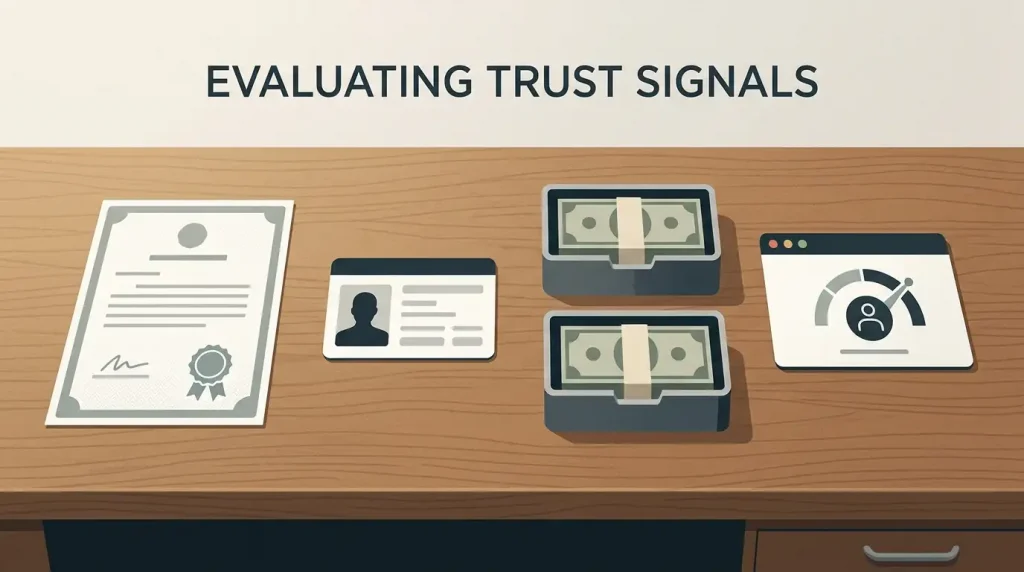
Slots Temple has several concrete trust signals that can be checked rather than taken on faith. Digital Division Ltd is listed by the Gambling Commission under account 58086, with an active Casino Remote licence for Great Britain. The operator also requires identity verification, publishes safer-gambling controls, provides a support email and explains how customer money is handled. Those are meaningful checks on legitimacy, but they are not the same as a guarantee that gambling is financially safe, that every withdrawal will be frictionless, or that customer funds would be fully protected in every insolvency scenario.
The most useful way to assess whether Slots Temple is legitimate is therefore to separate verifiable operating signals from broader assumptions. Licence status, operator identity, account checks and published fund-protection wording can be checked. Claims such as “completely safe”, “risk free” or “guaranteed payouts” cannot be responsibly inferred from those facts.
Table of Contents
- The strongest trust signal: a current Gambling Commission licence
- Who operates Slots Temple?
- Customer funds: separate accounts do not mean full protection
- Identity checks are a trust signal, not a cybersecurity guarantee
- Safer-gambling controls provide another layer of evidence
- Support: email is verified, live chat is not
- What the evidence does not tell you
- What "legit" can reasonably mean here
- A practical trust checklist before depositing
- How this evidence should affect a decision
- Frequently asked questions
The strongest trust signal: a current Gambling Commission licence
The clearest regulatory signal is the public Gambling Commission register. It lists Digital Division Ltd under account number 58086 and shows its Casino Remote licence as active. That connects the company operating Slots Temple with a current Great Britain remote-casino authorisation. The separate licence and regulation page sets out the exact scope of that authorisation and the limits of what the register confirms.
A licence matters because it is independently checkable. It is stronger evidence than a badge placed on a casino page or a claim copied by a review site. At the same time, a licence should not be treated as an insurance policy. It establishes that the operator is regulated for the licensed activity and subject to applicable rules. It does not remove normal gambling risk, guarantee that an individual dispute will be resolved in a player’s favour, or guarantee that every customer will find the service suitable.
Who operates Slots Temple?
The operator identity is Digital Division Ltd. Matching the operator named on the casino’s support pages with the company shown in the Gambling Commission register is another useful verification step because it reduces ambiguity about who is responsible for the regulated service. A trustworthy review should make that connection explicit instead of referring only to the brand name.
Operator identity also helps when checking terms, complaints information and regulatory records. A clear link between the casino brand and legal operator strengthens verifiability. In this case, that connection appears across the Gambling Commission register and Slots Temple’s own support material.
Customer funds: separate accounts do not mean full protection
Slots Temple publishes a customer-funds disclosure, but the wording deserves careful reading. Its support article says deposits are kept in separate accounts and describes the level of protection as “low”. The current Terms and Conditions also say customer funds are held in an independent account, while using the Gambling Commission category wording “not protected”. These two official pages use different labels, so the narrow fact they share is more useful than either headline alone: customer money is described as being held separately from business money, while the published protection wording does not amount to a promise of full protection.
This distinction matters. Segregating customer funds is a positive operational control, but it is not reasonable to convert that into a claim that balances are guaranteed under every possible financial event. The operator’s own disclosure should be read literally rather than upgraded into stronger protection language. If customer-funds protection is important to you, the label and current terms are more relevant than general phrases such as “secure casino” or “safe money”.
It is also worth separating fund protection from payment processing. The withdrawal guide covers payout processing and security checks. A withdrawal check can delay or interrupt a transaction for account-verification reasons, whereas customer-funds protection is about how money is held at the operator level. They are different questions.
Identity checks are a trust signal, not a cybersecurity guarantee
Slots Temple requires verification when an account is created. The registration flow visibly includes verification steps, and the Terms allow further checks when needed to confirm identity, age, address or payment details. That is relevant to legitimacy because regulated gambling operators need to know who is using an account and whether the customer is old enough to gamble.
Identity verification addresses account and eligibility risks rather than proving technical immunity from account takeover, phishing, data breaches or device-level malware. KYC can help reduce misuse, underage access and some forms of fraud. Slots Temple also publishes account-security advice covering passwords and phishing, alongside standard practices such as unique passwords, updated devices and caution with unsolicited messages.
The detailed account-opening process belongs on the dedicated registration page rather than here. The relevant trust point is simpler: verification exists, the operator can request further evidence, and players should expect account checks rather than anonymous gambling.
Safer-gambling controls provide another layer of evidence
Verified sources record customer-driven net deposit limits and self-exclusion as available Slots Temple controls. The operator’s terms also describe a broader safer-gambling framework that includes limits, time-out options and other account controls. These features matter because a regulated casino should give players practical ways to restrict access or spending, not just publish a responsible-gambling slogan.
Controls are still tools rather than guarantees. A deposit limit can reduce how much money is added over a chosen period, and self-exclusion can block access for a defined period, but neither makes gambling an investment or removes the possibility of losses. A user who needs stronger boundaries should use the controls before play becomes difficult to manage rather than waiting for a large loss.
Support: email is verified, live chat is not
Slots Temple publishes [email protected] as a customer-support address and also provides an online request form through its help centre. That gives players a documented channel for account questions and complaints. Current official information does not confirm live chat as an available support channel, so only the documented support routes can be treated as established.
This is a small but useful example of how to assess casino information. A review should not fill gaps with features that are common elsewhere. If a support method cannot be verified, it is better to omit it than to assume it exists. For disputes, the operator also publishes a complaints process, but the existence of that process should not be read as a promise about the outcome of any individual complaint.
What the evidence does not tell you
Some safety-related claims are not supported by the available evidence. The available verified sources do not contain an independent penetration-test result, audited cybersecurity certification, solvency report or insurance policy covering player balances. It would therefore be misleading to use technical phrases such as “bank-grade security” or “fully insured funds” unless a current source specifically supported them. The same caution applies to claims that verification makes fraud impossible. Verification is one control within a wider operating system, not proof that no account can ever be compromised.
Player behaviour also remains part of the risk picture. Even a properly licensed casino can produce rapid losses because casino games have built-in mathematical house edges and short sessions can vary sharply from theoretical return. Trusting the operator’s identity and regulatory status does not mean trusting a gambling session to produce a particular financial result. Keeping those two ideas separate is one of the most useful protections against overconfidence.
Finally, a current licence is a point-in-time fact. Regulatory status can change, as can terms, support routes and fund-protection wording. The public register and current operator documents provide the strongest basis for those specific checks because licence status, terms, support routes and fund-protection wording can change over time.
What “legit” can reasonably mean here
For a casino review, “legit” is most useful when it refers to checkable facts: there is an identifiable operator, an active regulator entry, published terms, customer verification, defined support routes and safer-gambling controls. Slots Temple meets those checkable criteria in the current public information.
What the word should not imply is that every customer will win, every payment will arrive instantly, every complaint will succeed or every pound held by the operator has the highest possible insolvency protection. Those are different propositions, and the available evidence does not justify them.
A practical trust checklist before depositing
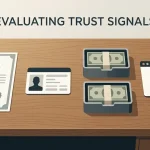
- Confirm that the operator name is Digital Division Ltd and that Gambling Commission account 58086 is still active.
- Read the current customer-funds wording rather than relying on a generic safety badge.
- Expect identity and payment-source checks, especially around account verification and withdrawals.
- Use deposit limits or self-exclusion controls if you need firm boundaries.
- Use the published support email or help-centre request form for account questions.
- Do not treat a licence, RTP figure or security statement as a guarantee of winning or of a dispute outcome.
If you also want to understand how game return percentages relate to risk, the RTP guide explains why theoretical return is not a promise of what one player will receive in a session.
How this evidence should affect a decision
The evidence supports treating Slots Temple as an identifiable, currently licensed Great Britain remote-casino operation rather than an anonymous gambling site. The more important question for an individual player is whether the product and its risks fit that person’s circumstances. Regulation and verification can reduce some operational uncertainties, but they cannot turn casino play into a low-risk financial activity.
A useful decision process is to check the regulatory record, understand how funds are described, confirm the support route and set limits before depositing. If any of those details changes, rely on the current regulator record and operator terms rather than an older review. For broader context, return to the full Slots Temple review or read the separate guide to gambling winnings tax.
Frequently asked questions
Is Slots Temple licensed by the Gambling Commission?
Digital Division Ltd is listed in the Gambling Commission public register under account 58086 with an active Casino Remote licence for Great Britain.
Are Slots Temple customer funds fully protected?
The official material does not support a claim of full protection. Slots Temple says customer deposits are held separately. Its support article uses the label “low” protection, while its current Terms use the Gambling Commission category wording “not protected”.
Does Slots Temple require verification?
Yes. The registration flow includes verification, and the Terms allow further identity, age, address or payment-method checks where required.
Can I contact Slots Temple by live chat?
Live chat is not confirmed as available by the current verified sources. The verified support route is email at [email protected], alongside the help-centre request form.