Gambling Winnings Tax UK: What Slots Temple Players Should Know
 Available in GB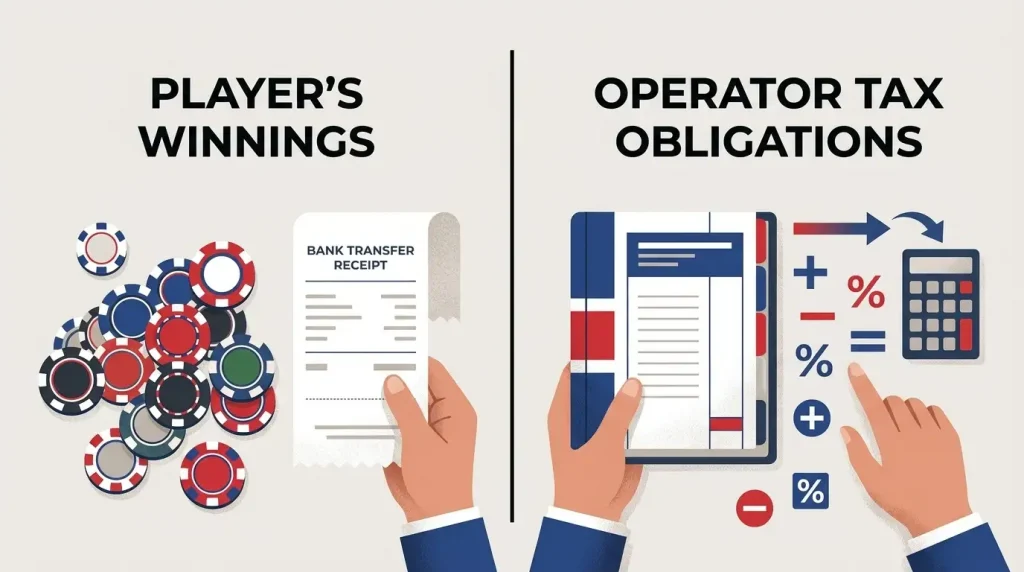
For an ordinary UK customer, gambling winnings from wagers and bets are generally not taxed as miscellaneous income. HMRC’s current Business Income Manual specifically excludes gambling winnings from wagers and bets from the miscellaneous-income charge. That means a typical Slots Temple player does not normally have UK income tax deducted simply because a casino spin produced a win.
This is separate from the taxes paid by gambling businesses. Remote Gaming Duty is an operator tax on remote gaming profits from UK customers. From 1 April 2026 the rate is 40 percent. It is not a 40 percent tax taken from an individual player’s casino withdrawal. Unusual circumstances can change the tax treatment, while the general position described here applies to ordinary personal gambling winnings.
Table of Contents
- Do UK players pay tax on Slots Temple winnings?
- Why players sometimes think casino winnings are taxed
- What Remote Gaming Duty actually applies to
- What this means when you withdraw winnings
- Keep records even when ordinary winnings are not taxed
- Three statements that should not be confused
- Examples: player win versus operator duty
- What a typical Slots Temple player needs to do
- When to get individual tax advice
- Frequently asked questions
Do UK players pay tax on Slots Temple winnings?
For ordinary gambling by a customer, the practical answer is generally no. HMRC’s Business Income Manual states that the miscellaneous-income provisions do not tax gambling winnings from wagers and bets. A normal casino win therefore does not become miscellaneous taxable income merely because money was won.
The important word is “ordinary”. Tax depends on facts and legal character, so the scope here is limited to the usual personal-player position. It does not try to decide unusual business, trading or professional arrangements, nor does it cover situations where money received alongside gambling could have a different tax character. If your circumstances are unusual or gambling receipts are connected with a wider commercial activity, individual advice may be appropriate.
Why players sometimes think casino winnings are taxed
Confusion often comes from mixing up player taxation with gambling duties charged to operators. The UK does tax gambling businesses in several ways, but those duties are not the same as taxing an individual’s win. A casino can owe gambling duty while a customer’s ordinary winnings remain outside the miscellaneous-income charge.
This distinction is especially important in 2026 because the Remote Gaming Duty rate changed. HMRC now states that, from 1 April 2026, Remote Gaming Duty is charged at 40 percent of a gaming provider’s profits from remote gaming with UK persons. That is an operator-side calculation based on gaming profits. It is not a percentage withheld from the amount shown in a player’s Slots Temple balance.
What Remote Gaming Duty actually applies to
HMRC defines Remote Gaming Duty around remote gaming providers and their profits from UK customers. In simplified terms, the calculation looks at gaming payments received from customers and amounts paid out as prizes, under the statutory rules for the duty. The operator accounts for the duty to HMRC.
For a Slots Temple player, the useful takeaway is structural rather than computational: Remote Gaming Duty belongs on the operator side of the transaction. You do not take a £100 casino withdrawal and subtract 40 percent because the RGD rate is 40 percent. The rate describes the operator’s tax liability on relevant profits, not a player withholding rate.
Regulation is also separate from taxation. Slots Temple’s Great Britain casino activity is regulated through the Gambling Commission, while gambling duties are administered by HMRC. The licence and regulation covers the regulatory side in more detail.
What this means when you withdraw winnings
If an ordinary player wins and withdraws money, the withdrawal itself is not converted into taxable miscellaneous income simply because it reaches a bank account. In practical terms, a player does not normally need to reduce a casino withdrawal by an income-tax percentage for HMRC on the basis that it was a gambling win.
That does not mean every payment connected with gambling has identical tax treatment. The source and nature of money still matter. For example, a payment for providing a service, creating content, promoting a business or entering a separate commercial arrangement is not automatically a gambling win just because it is connected to the gambling industry. The tax discussion here is limited to winnings arising from wagers and bets.
Keep records even when ordinary winnings are not taxed
A player may still find account and banking records useful. Large transfers can prompt ordinary questions from a bank, mortgage lender, accountant or other institution about where money came from. Being able to show that a payment came from a gambling account can help explain the source of funds, even where the winnings themselves are not being taxed as miscellaneous income.
Record keeping is also useful for resolving account questions. A casino withdrawal can be subject to payment and security checks that have nothing to do with tax. Those practical payout issues are covered separately in the site’s withdrawal guide rather than being treated as part of HMRC taxation.
Three statements that should not be confused
- “Ordinary gambling winnings are generally not taxed as miscellaneous income.”
- This reflects the current HMRC manual for winnings from wagers and bets.
- “Remote Gaming Duty is 40 percent from 1 April 2026.”
- This is an operator duty on relevant remote gaming profits from UK customers.
- “Every gambling-related receipt is always tax-free.”
- This is too broad. The tax treatment depends on what the receipt actually is and on the surrounding circumstances.
Keeping those statements separate prevents the two most common mistakes: treating operator duty as a deduction from player winnings, or turning the ordinary treatment of gambling winnings into an unlimited rule for every possible gambling-related payment.
Examples: player win versus operator duty
Consider a simple player example. A customer deposits personal money, plays casino games and later withdraws a net win. For the ordinary tax question addressed by HMRC’s miscellaneous-income guidance, the relevant receipt is a gambling win from wagers or bets. The fact that the withdrawal reaches a bank account does not by itself turn it into miscellaneous taxable income.
Now consider the operator side. Slots Temple’s operator receives gaming payments from UK customers and pays prizes. Remote Gaming Duty is calculated under rules that apply to the provider’s relevant remote gaming profits. HMRC then charges the operator at the applicable rate. The tax system is therefore looking at a different taxpayer, a different tax base and a different legal obligation from the player’s personal win.
A third example helps show the boundary. If someone receives money for a service connected with gambling, such as producing promotional work or providing commercial services, the payment is not automatically a gambling win merely because the subject is a casino. Its tax treatment follows what the payment actually represents. That is why broad claims that “all gambling-related money is tax-free” are unreliable.
What a typical Slots Temple player needs to do
For ordinary recreational play, there is generally no special income-tax deduction to calculate on a Slots Temple win. The more immediate tasks are practical: keep your account details accurate, complete any required verification, and retain transaction records if you need to explain where funds came from later.
If you are comparing the operator itself rather than tax treatment, the safety and trust looks at licensing, customer-funds wording, account verification and support. For the wider review of games, payments and mobile access, return to the full Slots Temple review.
When to get individual tax advice
For ordinary personal casino winnings, the general UK position can be stated clearly, while unusual circumstances may require individual tax advice. If gambling receipts are part of a business arrangement, mixed with payments for services, received through a company, connected with another jurisdiction, or otherwise materially different from ordinary personal wagers and bets, a qualified tax adviser can assess the specific facts.
Tax rules also change. The HMRC sources used here were rechecked on 28 September 2026, including the Business Income Manual and the current Remote Gaming Duty guidance. That date matters when comparing older tax explanations with the rules currently in force. If you are relying on this information for a later tax year, recheck the current HMRC material rather than assuming the rates and guidance are unchanged.
Frequently asked questions
Do I pay income tax on a Slots Temple jackpot?
For an ordinary player, winnings from wagers and bets are generally not taxed as miscellaneous income. Unusual circumstances can require separate analysis.
Does Slots Temple deduct 40 percent Remote Gaming Duty from my winnings?
No. The 40 percent Remote Gaming Duty rate applies to relevant remote gaming profits of the operator from UK customers. It is not a 40 percent withholding tax on an individual player’s withdrawal.
Why is the casino taxed if my ordinary winnings are not?
The UK tax system treats operator gambling duties and the tax treatment of a customer’s gambling winnings as separate questions. A business can owe gambling duty without that duty becoming a tax charged directly on each player’s win.
Should I keep evidence of a large casino win?
Keeping account and transaction records can be useful for explaining the source of funds to banks or other institutions, even where the ordinary gambling winnings are not taxed as miscellaneous income.