Slots Temple Payment Methods UK: Deposits, Cards and Banking
 Available in GB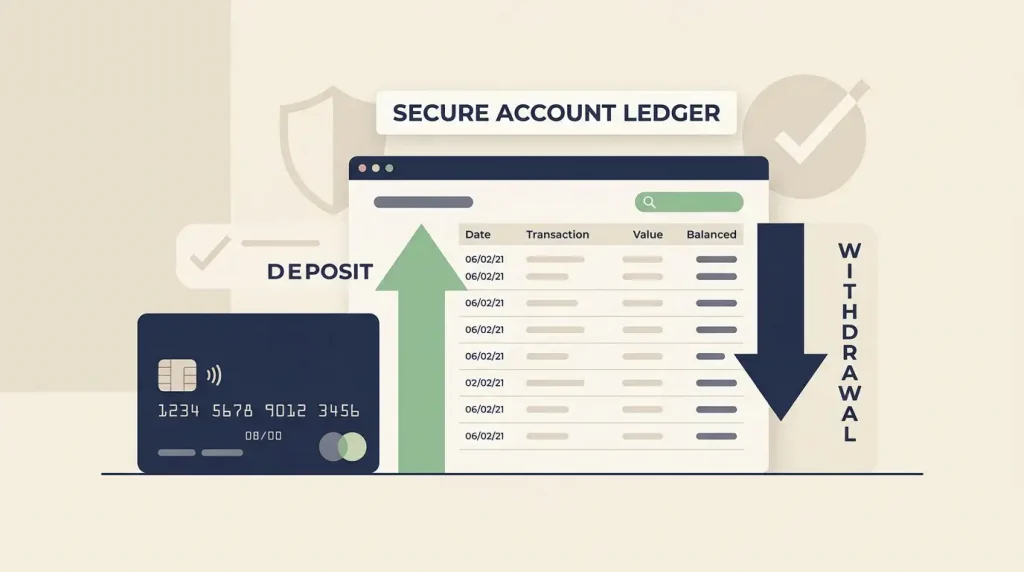
Slots Temple’s current UK support page lists one deposit route: a personal debit card issued in the UK. The minimum deposit is £10, the card must belong to the account holder and be registered in the same name, and Slots Temple states that it charges no deposit fee. The support page describes deposits as instant. Business debit cards are not accepted.
Credit cards are a separate issue. Gambling Commission rules prohibit Great Britain gambling operators from accepting credit card payments for online casino gambling, so a credit card is not a valid alternative. The deposit section covers funding methods and general banking rules. For the separate £10 withdrawal minimum, processing stages and security checks, use our withdrawal guide.
Table of Contents
- Slots Temple deposit methods at a glance
- Why the debit card must be in your own name
- The £10 minimum deposit
- Deposit fees and bank-side charges
- Why credit cards are not a deposit option
- Deposit speed: what "instant" means in practice
- Do not assume e-wallets, bank transfer or crypto are available
- Deposits and withdrawals use related but different rules
- Customer funds: what "low protection" means
- A practical deposit checklist
- Bottom line
- FAQ
Slots Temple deposit methods at a glance
| Banking point | Current verified information |
|---|---|
| Publicly listed UK deposit method | Personal UK-issued debit card |
| Minimum deposit | £10 |
| Deposit fee charged by Slots Temple | None |
| Deposit timeframe shown by Slots Temple | Instant |
| Name requirement | Card must belong to the customer and be registered in their own name |
| Business debit cards | Not allowed |
| Credit cards | Not permitted for Great Britain online casino gambling |
The key point is that the public support article does not present a long menu of e-wallets, bank transfers or crypto options. It names Debit Card (UK issued only), gives the £10 minimum and states that more payment methods are planned. A useful UK payment guide should therefore report the method that is actually verified rather than copy a generic casino banking list.
You can check the operator’s current wording on its official deposit methods and time frames page. Payment menus can change, so the logged-in cashier is the practical place to confirm what is available for a particular account before moving money.
Why the debit card must be in your own name
Slots Temple’s support information says the card used for deposits must belong to the customer and be registered in that person’s own name. This is not a cosmetic detail. Matching the funding source to the account holder gives the operator a cleaner link between the player identity, the payment method and the money entering the gambling account.
For a customer, the simplest interpretation is practical: do not plan to fund the account with a relative’s, partner’s or friend’s debit card. Even if the cardholder agrees, the published rule says the card must be yours. It also specifically excludes business debit cards, so a company card should not be treated as interchangeable with a personal card.
The account itself is also subject to identity verification. Slots Temple says it verifies all customers during registration using information such as name, address and date of birth. Our registration and KYC covers that process separately. Keeping the account name and payment method aligned reduces the chance that a basic ownership mismatch becomes a problem later in the customer journey.
The £10 minimum deposit
The current official UK deposit article sets the minimum debit-card deposit at £10. That is a transaction floor, not a suggested amount to gamble and not a deposit limit. A minimum answers the question “what is the smallest deposit the cashier will accept through this method?” It does not answer “how much should I deposit?”
That distinction matters because payment mechanics and personal gambling limits serve different purposes. A player can decide that a personal budget should be lower than an amount they could technically deposit over time. The fact that £10 is accepted does not make repeated £10 deposits appropriate or harmless.
Slots Temple also offers account-level safer-gambling controls in other parts of its service. Those controls should be considered separately from the payment method itself. A banking page is most useful when it explains what the cashier accepts without turning a transaction minimum into spending guidance.
Deposit fees and bank-side charges
Slots Temple’s current support article states that its deposit fee is “None.” That is the operator’s own charge for the listed deposit route. It should not be broadened into a guarantee that no bank or card issuer could ever apply its own treatment to a transaction, because the support article only states the operator fee.
For most users, the practical check is straightforward. Review the amount shown in the cashier before confirming the transaction, and if your bank has unusual account terms or gambling controls, check those separately. If your bank applies a gambling transaction block, that restriction can prevent a payment even when the casino supports the card type.
The important editorial distinction is between “Slots Temple charges no deposit fee” and “there can never be any external banking consequence.” Only the first statement is supported by the operator’s payment article.
Why credit cards are not a deposit option
The Gambling Commission’s current guidance says operators in Great Britain must not accept credit card payments for online betting, casino and bingo. The rule is intended to stop direct gambling with borrowed credit and also applies where a payment route would allow credit-card funds to reach gambling through certain intermediaries.
For Slots Temple customers in Great Britain, that means a credit card should not be treated as a fallback when a debit card payment is unavailable. The site’s own public deposit article lists a UK-issued personal debit card, which fits the regulatory position.
UK payment rules can differ materially from those applied by international casino sites. A payment method available at an overseas gambling site, or mentioned in outdated third-party material, is not automatically valid for a Great Britain customer at a Gambling Commission licensed operator.
Deposit speed: what “instant” means in practice
Slots Temple labels the deposit timeframe as instant. In payment terminology, that tells you the normal operator-side expectation for a successful card deposit. It does not mean every attempted payment must be approved or that a bank cannot decline, block or review a transaction.
A deposit can fail before money reaches the casino account for reasons outside the public payment guide, including card details, issuer controls or a bank’s own gambling block. The correct response to a declined transaction is not to assume that an unsupported method will work instead. First check the card and account details, then use the casino support route or your bank if the issue appears to be outside the cashier.
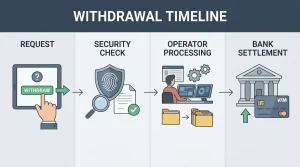
It is also useful to distinguish deposit speed from withdrawal speed. Money moving into an account and money being paid out are not mirror-image processes. Withdrawals can involve operator processing and security checks before the bank or card provider completes settlement.
Do not assume e-wallets, bank transfer or crypto are available
A generic checklist of Visa, Mastercard, PayPal, Skrill, bank transfer and cryptocurrencies is not reliable here. Slots Temple’s current public UK deposit article lists a UK-issued debit card and says Apple Pay and Google Pay are planned, rather than presenting them as current methods.
Accordingly, Apple Pay, Google Pay, PayPal, Skrill, bank transfer, open banking and crypto are not listed as currently supported deposit methods. A future support-page update or a method visible in the logged-in cashier could change the position, so planned features and industry norms remain separate from current availability.
This is one reason the cashier should be treated as the final operational check for your own account. Public help pages provide the verified baseline, while account availability can depend on what the operator currently exposes to that customer.
Deposits and withdrawals use related but different rules
Deposits answer how money enters the account. Withdrawals answer how verified winnings or account balances leave it. Slots Temple’s withdrawal article also lists a UK-issued debit card and says that, if a customer previously deposited, the same card must be used for withdrawals for security reasons.
That makes the initial funding choice more important than it might look. Using a personal card that clearly belongs to you is not just about getting the first deposit accepted. It also supports a cleaner payment trail when money is later withdrawn.
The exact withdrawal minimum and processing description are residual high-risk facts and are handled on the dedicated withdrawal page after a fresh check of the official source. This parent page deliberately avoids collapsing those payout timings into the deposit section.
Customer funds: what “low protection” means
Slots Temple’s March 2026 customer-funds article says deposits are kept in separate accounts and describes its level of protection as “low.” Those two points should be read together. Separate accounts are part of the disclosure, but the operator itself does not describe the protection level as high.
That wording should not be converted into a claim that balances are guaranteed, insured or fully protected against every insolvency scenario. The more accurate reading is that the operator says customer deposits are segregated from business accounts while classifying the protection level as low.
For the regulatory and trust context behind that disclosure, see our licence and regulation. The important banking takeaway is simply to understand the protection statement as written rather than assume that segregation equals a guarantee.
A practical deposit checklist
- Use your own personal debit card. The public rule says it must be UK-issued, belong to you and be registered in your own name.
- Do not use a business debit card. Slots Temple explicitly says business debit cards are not allowed.
- Expect a £10 transaction minimum. Treat that as the cashier floor, not a recommended gambling budget.
- Do not attempt a credit card deposit. Great Britain rules prohibit licensed online casino operators from accepting credit card gambling payments.
- Check the amount before confirming. Slots Temple states no deposit fee, but you should still review the cashier and your own bank terms.
- Keep the funding trail simple. A personal card in the same name as the account is consistent with the site’s payment and verification rules.
- Recheck the cashier if methods change. Do not assume a generic e-wallet or crypto option exists unless it is actually shown and supported.
Bottom line
Slots Temple’s verified UK deposit setup is unusually simple compared with generic casino payment tables. The current public support page lists a personal UK-issued debit card, a £10 minimum deposit, an instant deposit timeframe and no operator deposit fee. The card must be the customer’s own and business debit cards are excluded.
Credit cards are not an alternative because Great Britain licensed online casino operators are prohibited from accepting them for gambling. Other methods should be confirmed in the live cashier for the account. The payment source should remain in the account holder’s own name, while payout timing is covered separately in the withdrawal guide.
The full Slots Temple review places these banking details alongside the licence, games, mobile access and account-verification process.
FAQ
What is the minimum deposit at Slots Temple?
The current official UK support article lists a £10 minimum for the UK-issued personal debit card deposit method.
Does Slots Temple charge a deposit fee?
The operator’s current UK payment support page states that the deposit fee is none.
Can I deposit with a credit card?
No. Gambling Commission rules prohibit Great Britain online casino operators from accepting credit card gambling payments.
Can I use someone else’s debit card?
The published Slots Temple rule says the card must belong to you and be registered in your own name.
Does Slots Temple accept Apple Pay or Google Pay?
The current public deposit article says those methods are planned to come later. They are therefore treated as planned rather than currently available.